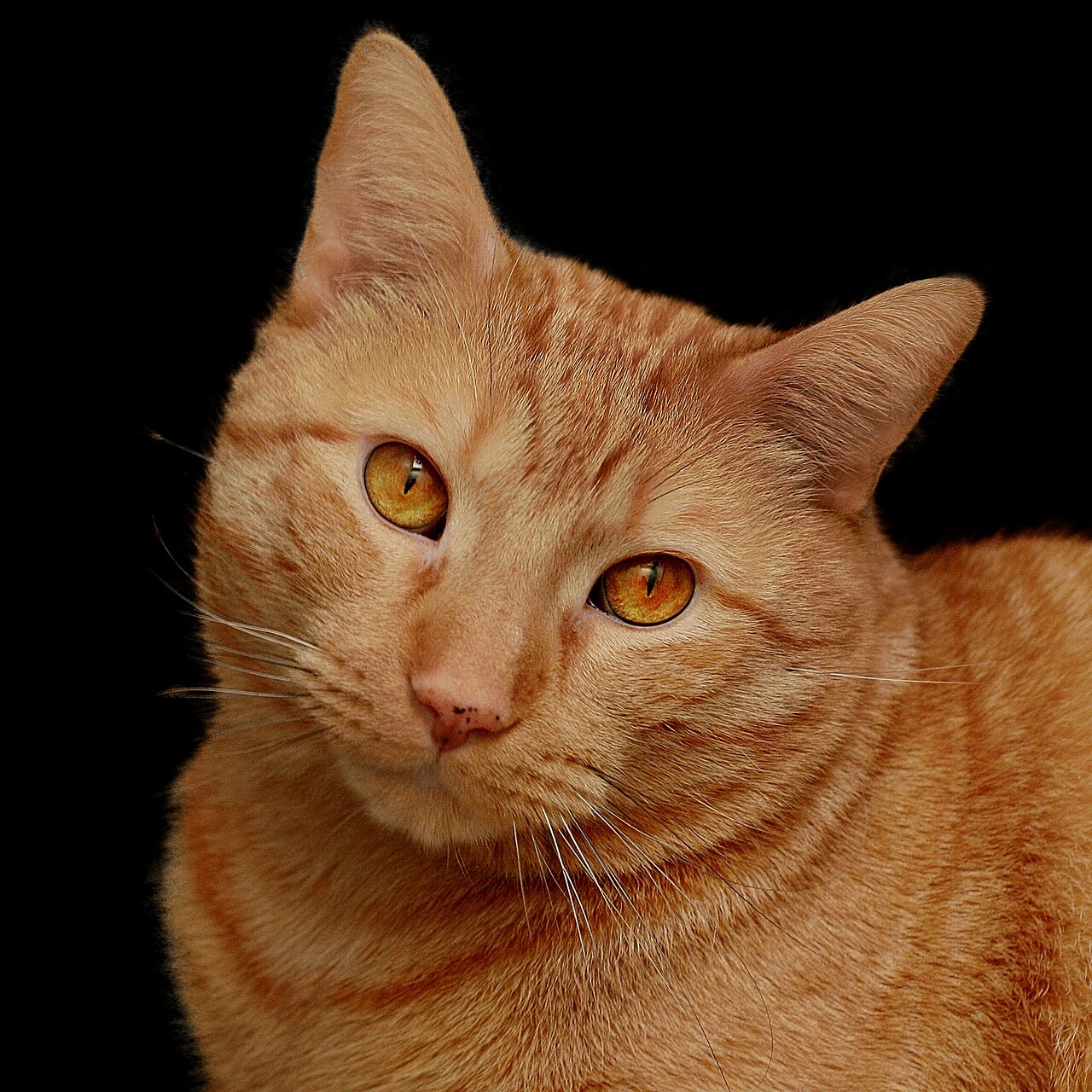
Last month a group of researchers at a rival hallway published a paper arguing that the edge of a table is “merely where the table stops” and that nothing meaningful happens there. Professor Mittens Von Thud has asked to respond, at length, at three in the morning, from the top of a bookcase.
The claim
The rival paper makes three assertions. First, that tables end. Second, that objects placed on tables are no more likely to fall than objects placed anywhere else. Third, that a paw is “just a paw”. The laboratory rejects all three, though we concede the first, with caveats.
Where the paper goes wrong
The authors tested only objects that were already stable. They placed a mug in the centre of a table, observed that it did not fall, and concluded that tables are safe. This is like testing a cat’s ability to jump by watching it sleep.
They also failed to include a witness. A drop without a human in the room is a tree falling in a forest, and everyone knows trees do not fall unless somebody is trying to read.
Finally, the authors appear to have used a single paw, always the left. It is well established that the left paw has a gentler touch, and that the right paw has the confidence of a person who has already decided. A fair study must use both.
Our counter evidence
We repeated the rival experiment under controlled conditions. Over eight weeks, our team placed 300 objects at varying distances from the edge. The results were as follows:
- Objects placed in the centre: 14 percent fell, mostly after an intervention
- Objects placed within a paw width of the edge: 96 percent fell
- Objects placed exactly on the edge: 100 percent fell, with some objects falling before they were placed
The difference between the first and last result, in the words of Dr. Biscuit Newton, “is the whole of science”.
A word on tone
We are saddened by the language of the rival paper, which uses phrases such as “pointless” and “please stop sending us glassware”. Academic disagreement should be conducted with dignity and, where possible, with a very slow push.
Next steps
The laboratory will submit its rebuttal to the Journal of Descent and Related Sounds. We will also be sending, in the spirit of collegiality, a small gift basket to the rival laboratory. It contains one decorative egg cup. We look forward to their findings.
“Reasonable cats can disagree. Unreasonable cats can be moved to the floor.” Professor Von Thud, from the bookcase
Responses from the wider community
Since the publication of the rival paper, the laboratory has received messages from many sympathetic colleagues. A researcher at a neighbouring windowsill wrote that she had always suspected the edge of a table was a place of consequence. A sofa arm laboratory sent a short note which simply read “yes”. We were moved by this show of support, and also by the sofa arm laboratory, who sat on our keyboard until we replied.
What the skeptics get right
In the interest of fairness, the laboratory acknowledges a few points where the hallway group has a case. It is true that some tables are very large, and that edges can be hard to find in a poorly lit room. It is also true that a paw, taken alone, does not accomplish very much. A paw needs a plan, a moment and a clear line of sight to a fragile object. These conditions, however, are present in almost every home.
A proposal for joint research
Professor Von Thud has proposed a joint experiment between the two laboratories. Each team will place ten identical mugs on identical tables, and each will use their preferred method for one week. The mugs will then be inspected. We expect the hallway group’s mugs to be sitting where they began, looking calm. We expect ours to be in the kitchen, in several parts, and looking calm as well.
Closing remarks
The laboratory thanks all those who contributed to this debate, including the mug, who declined to comment. Science advances not through agreement but through the patient accumulation of objects on the floor.
Leave a Reply